

Forgive Us
On Confession, Communion, and the Cost of Grace

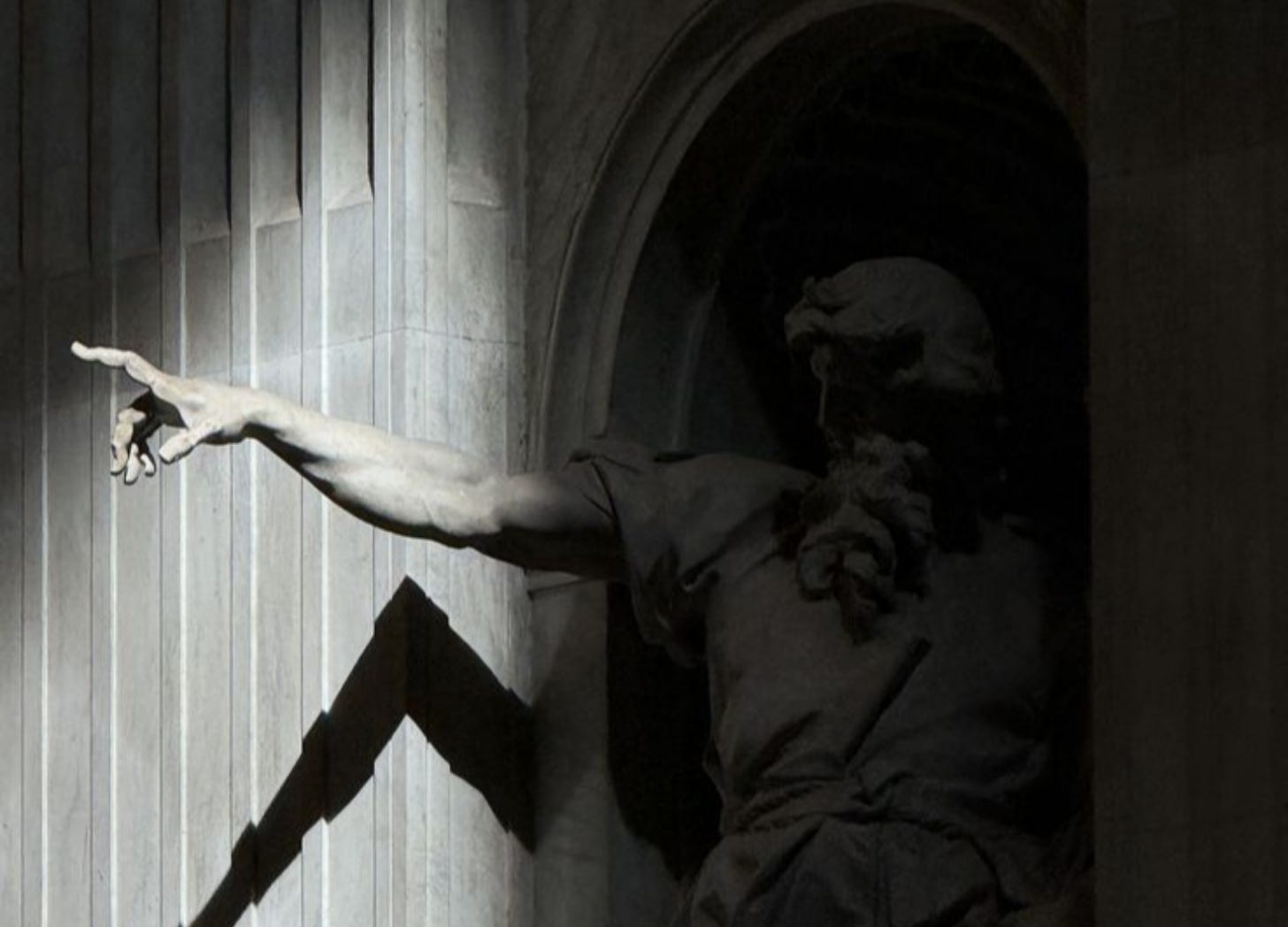
What follows is a manuscript for a sermon preached at Dover Baptist Church
Forgiven, and Forgiving
For a few weeks now, the Lord has been teaching us the family language of prayer. We have learned to begin with, “Our Father in heaven.” We have been taught to ask that his name would be hallowed, that his kingdom would come, that his will would be done, and that he would give us our daily bread. Then Jesus brings us to the petition that searches us, and hopefully reshapes our shared life in the church:
“And forgive us our debts, as we also have forgiven our debtors” (Matthew 6:12, ESV).
And because Jesus knows how easy it is for us to gloss over difficult teachings, Jesus adds a sober warning to this petition:
“For if you forgive others their trespasses, your heavenly Father will also forgive you, but if you do not forgive others their trespasses, neither will your Father forgive your trespasses” (Matthew 6:14–15, ESV).
This morning we will break this prayer down piece by piece, and we will follow the Lord’s order and begin by considering our need for pardon from God.
Living Under the Fountain of Mercy
The Lord teaches us to pray, “Forgive us our debts.”
“Debts” means sins. Luke makes it plain: “Forgive us our sins, for we ourselves forgive everyone who is indebted to us” (Luke 11:4, ESV). Sin is a debt because we owe God perfect love, trust, and obedience; and we have not paid what we owe. We have withheld the honor due his name and resisted the rule of his will. “All have sinned and fall short of the glory of God” (Romans 3:23, ESV).
If the Lord kept a strict account, if he weighed every word, every thought, every failure, none of us would still be standing. We would be righteously declared guilty, and justly condemned. And yet Scripture dares to say, “With you there is forgiveness, that you may be feared” (Psalm 130:3–4, ESV). God’s mercy never shrinks his majesty, and His forgiveness never softens his holiness.
Here is the heart of the gospel. When God lifts our guilt, he does more than wipe a record clean. He changes people. He takes enemies and makes them worshipers. His forgiveness is a strong mercy that, if truly received; shatters our pride, softens what is hard in us, and turns a sinner’s face back toward God.
That is why cheap grace is a lie. If a man says he has been forgiven, washed in the blood of Christ and indwelt by the Holy Spirit, and yet he is still comfortable with his sin, unbothered by it, and unconcerned for the souls around him, there is no biblical reason to call that redemption. Grace does not leave us the way it found us.
Real forgiveness bows the knee. It produces grateful, glad obedience to our loving and glorious King. I am going to be blunt for a moment. If you have not surrendered to Jesus as Lord, do not presume upon him as Savior. To know him is to love him. And to love him is to start hating what he hates and loving what he loves.
But if we are already forgiven in Christ, why keep asking?
Because God is not only the Judge. He is also the loving Father. The Father who gave his Son is not looking for reasons to refuse his children. He delights to forgive through the finished work of Christ.
When we first trust Christ, God declares us righteous once for all. “There is therefore now no condemnation for those who are in Christ Jesus” (Romans 8:1, ESV).
And yet, sin clouds fellowship. A child can belong to his father and yet live at a needless distance. Confession is not re-entering the courtroom. It is returning to the table. We confess because we are loved, and we do not want anything between our hearts and the Father’s face. That is why John says, “If we confess our sins, he is faithful and just to forgive us our sins” (1 John 1:9, ESV). And he also reminds us that when we fail, “we have an advocate with the Father, Jesus Christ the righteous” (1 John 2:1, ESV).
Daily confession does not re-earn salvation, as if it were something we could lose. It restores communion. It retrains the heart to hate what grieves the One we love.
And God does not forgive us by overlooking our sins. He forgives by judging sin in a Substitute. “In him we have redemption through his blood, the forgiveness of our trespasses” (Ephesians 1:7, ESV). The cross is the ground of our pardon, not the intensity of our regret.
So confess plainly. Name sin with full honesty and without any pretense or excuse. Trust the promise of God rather than feeding the shame that so often keeps you captive. And ask for a cleansed heart, not merely a cleared record. Let me say that again. If you just want God to forgive you, but you don’t want to change, you are not asking for God’s saving mercy and you should not expect to receive it.
The Family Resemblance
Now it is only once we understand the cost and extent of our forgiveness that we can move on to the second part of this petition. “And forgive us our debts, as we also have forgiven our debtors.”
At this point, many consciences tighten. Is Jesus teaching that God forgives us only if we forgive others, as if grace were something we had to pay back in forgiveness.
Absolutely not. Scripture is unambiguous that salvation is the gift of God. “By grace you have been saved through faith… not a result of works” (Ephesians 2:8–9, ESV).
So what is Jesus saying here? Jesus is stating something that should be so obvious, that we should feel embarrassed that it needed elaboration at all.
Jesus is saying the obvious truth, that those who are truly forgiven, will forgive others. When grace takes root in our hearts, our posture changes. We stop living with a clenched fist.
Jesus teaches this in the parable of the unforgiving servant:
“Therefore the kingdom of heaven may be compared to a king who wished to settle accounts with his servants. When he began to settle, one was brought to him who owed him ten thousand talents. And since he could not pay, his master ordered him to be sold, with his wife and children and all that he had, and payment to be made. So the servant fell on his knees, imploring him, ‘Have patience with me, and I will pay you everything.’ And out of pity for him, the master of that servant released him and forgave him the debt. But when that same servant went out, he found one of his fellow servants who owed him a hundred denarii, and seizing him, he began to choke him, saying, ‘Pay what you owe.’ So his fellow servant fell down and pleaded with him, ‘Have patience with me, and I will pay you.’ He refused and went and put him in prison until he should pay the debt. When his fellow servants saw what had taken place, they were greatly distressed, and they went and reported to their master all that had taken place. Then his master summoned him and said to him, ‘You wicked servant! I forgave you all that debt because you pleaded with me. And should not you have had mercy on your fellow servant, as I had mercy on you?’ And in anger his master delivered him to the jailers, until he should pay all his debt. So also my heavenly Father will do to every one of you, if you do not forgive your brother from your heart.” (Matthew 18:23-34, ESV)
If we presume upon God’s mercy while refusing to extend mercy ourselves, we show that we neither love God nor do we love our neighbors.
Again, forgiveness does not earn God’s love but it is proof that God’s love is real in us. Likewise a settled refusal to forgive, a heart that will not loosen, exposes something spiritually rotten at the root. If we will not forgive, we should not soothe ourselves with religious language. We should repent and come back to the heart of the gospel. Make no mistake, your very soul is on the line.
A Forgiven And Forgiving Church
And again, we should note that this petition is not meant to stay private. It is meant to shape the whole church community.
Jesus ties worship to reconciliation. If you remember that a brother has something against you, go and be reconciled first (Matthew 5:23–24). Do you realize how wrong it is to sing songs of worship praising God for how He has forgiven us, while we harbor hatred towards our brothers and sisters?
This is why I always give us, as a church family, the opportunity to pray in repentance before we partake in Holy Communion. It is also why I do not encourage anyone who is not a baptized believer to partake in Holy Communion, because it is a feast for repentant sinners. Paul warns about taking it in an unworthy manner, especially when division and contempt linger in the body (1 Corinthians 11:27–29). Make no mistake, confession and forgiveness are not interruptions to worship. They are a part of worship.
So what would it look like if this line of the Lord’s Prayer actually governed our life together?
It would mean we would keep accounts short. We would not weaponize failures. We would not let resentment become a habit. We would tell the truth, and we do it in love. We would protect the vulnerable, pursue the wandering, and refuse the slow poison of bitterness.
I know forgiveness is difficult, but let’s be honest with ourselves. The world today is so seeped in bitterness, resentment, grievance, and pettiness. Don’t you want something better than this?
When Forgiveness Feels Impossible
I understand that some wounds will not heal in this lifetime. Some betrayals are so deep you simply will not recover from on this side of eternity. I don’t want to diminish your pain, and scripture never asks you to pretend it did not hurt. Forgiveness is not a form of spiritual amnesia. It is not refusing to call evil out for the evil that it is or the harm that it did.
So what is forgiveness? Forgiveness is releasing vengeance into God’s hands and refusing to live as a hostage to the past. It is for your good that God calls you to forgive.
If you find yourself saying, “I cannot forgive,” begin honestly: “Father, I want to want to forgive. Help me.” That prayer is not a bad prayer at all. It is a beautiful prayer of surrender and a first step towards healing.
Don’t just stop there though. Go back to the cross and listen again to the Son of God who said, “Father, forgive them” (Luke 23:34, ESV). Keep looking at the weight of your own forgiven debt. Ask the Spirit to do what you cannot do by sheer willpower.
Christ is patient with slow steps. He will not crush you for limping toward obedience. But he will not leave you chained to bitterness either. He loves you too much for that.
Living under the fountain
Church, Jesus put this petition on our tongues so we would live under the fountain of grace, and become conduits of that grace.
Do not stay away from the Father because of your sins. Run to him. Name them. Trust the blood of his Son. He is faithful and just to forgive.
And do not hold others hostage to their worst moments. Release the debt to God. Pray for them. Seek whatever peace is wise and possible. Refuse to let resentment reign.
Some of you need first to come to Christ for pardon. You have never yet trusted him as your only hope. Hear the promise: “Everyone who believes in him receives forgiveness of sins through his name” (Acts 10:43, ESV). Come to him. He will not cast you out.
Others of you are in Christ but living at a distance, keeping real sins in the dark. Bring them into the light. There is more mercy in him than sin in you.
And I know some of you are still carrying an old injury like a stone in your pocket, you touch it every day. I’ve been there too. Bring that to the Lord. Tell him what it cost you. Then ask him for the miracle of a forgiving heart. You don’t have to keep carrying it. You can be free.
So let us pray this line of the Lord’s Prayer like we mean it. Let us live like forgiven people. And let us become, by the Holy Spirit, a forgiving people.
Closing Prayer
Father, we thank you for the gospel of free forgiveness in Jesus Christ, bought by his blood and offered to all who believe. Now seal your Word to our hearts and turn it into repentance, faith, and obedience. Bring confession where it is needed, reconciliation where it is possible, comfort where guilt has lingered, and wisdom and strength where wounds run deep. Make our church a place where mercy is practiced and bitterness is refused. And keep us from temptation as you deliver us from evil. Do this for the glory of your name and the good of your people, through Jesus Christ our Lord. Amen.